A Silver Object on the Table: Reading Its Symbolism Without Guesswork
Read silver table symbolism without guesswork by separating visible design cues from the gathering’s customs, relationships, and intended meaning.

A silver spoon rests beside a folded napkin, and someone at the table asks whether it means anything. Silver table symbolism is tempting to read at a glance, but the same object can signal ceremony, family continuity, hospitality, or simply a practical choice. Start with what you can see, then ask what the gathering makes plausible.
Begin with the object
Before assigning meaning, describe the silver item as if you were making a museum label: a small serving spoon, a polished tray, a plain candlestick, or a cup with an engraved handle. Note its shape, scale, finish, decoration, and position. These details are evidence; a claim about what the object represents is an interpretation.
Look at how the object is being used. A tray carrying shared food has a different immediate role from a trophy-like centerpiece that nobody touches. Placement also matters: an item at every setting appears to belong to the meal’s routine, while one placed at the center may be intended to draw attention.
Separate features you can point to from meanings you might infer. “The bowl has a floral border” is observable. “The flowers stand for renewal” is a symbolic claim that needs support from the people, tradition, or design context involved.
Write down the plain description first; it keeps the interpretation anchored.
Read the design cues
Decoration can suggest a mood or a social register without proving a specific message. A restrained form may feel formal or understated; elaborate engraving may attract attention and signal that someone chose the piece for display as well as use. These are impressions, not universal codes.
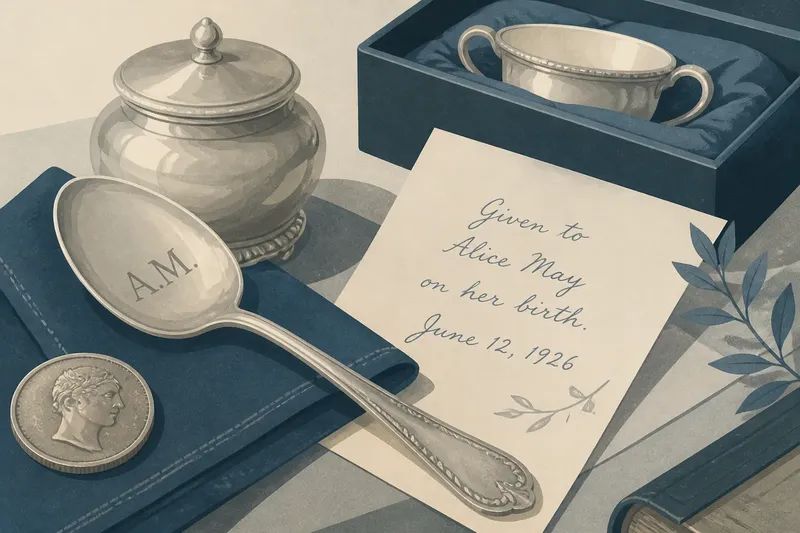
Inspect motifs closely. A crest, initials, a date, or a recognizable emblem can connect an object to a household, organization, or occasion. A leaf, star, bird, or geometric pattern is less specific on its own. Similar motifs can carry different associations across families and communities, so avoid treating a familiar shape as a fixed symbol.
Material and finish offer clues about presentation, not a hidden message by themselves. A bright, carefully arranged surface may contribute to a sense of occasion; a well-used spoon may make the table feel familiar. Neither appearance tells you who owns the object, why it was brought out, or what it means to each guest.
When a detail catches your eye, describe it precisely before naming its possible associations.
Place it in context
Next, consider the gathering. Is it a family meal, a formal reception, a religious observance, a wedding, or a community celebration? The event can narrow the range of plausible meanings, but it cannot settle them alone. Customs differ, and a silver object may be present for a practical reason unrelated to symbolism.
Ask who selected the piece and how it arrived at the table, if that information is available. A host may have chosen a serving bowl because it fits the menu; another person may have brought a family object to mark a shared occasion. Provenance and intention can change the reading more than the object’s visual style.
Imagine a host sets a silver tray beside a cake at a small family gathering. You can observe that it holds the cake and occupies a visible place; you cannot conclude from those details alone that the tray represents family unity. If the host says it belonged to a relative and was brought out for a reunion, continuity becomes a reasonable interpretation, while the tray’s practical role remains true.
Context should refine an interpretation, not turn a guess into a fact.
Ask what the object does
Function is often the clearest starting point for understanding a table object. A serving spoon helps distribute food, a cup holds a drink, and a candlestick supports a light. These tasks can contribute to meanings such as welcome, sharing, or ceremony, but those meanings arise through use and setting rather than from silver alone.
Notice whether the item is being handled, passed, presented, or left untouched. Passing a shared serving piece can make participation visible. A decorative object kept apart from the meal may instead frame the table or mark a focal point. Describe the action before interpreting its social tone.
Also look for a mismatch between function and placement. A small object displayed prominently may have been selected for its personal story, while a large platter within easy reach may simply serve the meal. That contrast can prompt a useful question, but it is not evidence of a particular answer.
Separate evidence from inference
Use three mental columns: what is visible, what the setting supports, and what remains unknown. Visible evidence includes an engraved name or the object’s position. Context-supported interpretation might be that the piece marks a formal occasion because the host identifies it as part of that event. Unknowns include an owner’s private associations or a motif’s intended meaning without an explanation.
Choose careful language that matches the evidence. Say “the engraving links the piece to this family” if the name is clear and the family connection is known. Say “the design may suggest a ceremonial role” when the evidence is suggestive but incomplete. Avoid stating that silver always means wealth, purity, status, or celebration; those broad claims erase differences among people and occasions.
If the object’s meaning matters to the conversation, ask the host a neutral question: “Is there a story behind this piece?” That invites information without suggesting that you already know its significance. If no one knows, leaving the interpretation open is more accurate than supplying a confident explanation.
Questions readers ask?
Does silver always signify wealth?
No. Silver can be inherited, borrowed, newly made, or chosen for a practical purpose, and its appearance alone does not establish someone’s resources. Read the object alongside its use and the gathering rather than treating material as a complete social biography.
Can a motif have one fixed meaning?
Some emblems have recognized associations within a particular family, institution, or tradition, but similar shapes can mean different things elsewhere. Look for identifying details and ask about the specific context before making a claim.
What if nobody knows the object’s story?
Stick to observable details and describe any interpretation as a possibility. You can still notice how its placement, decoration, and use shape the table without inventing an intention for its maker or owner.
How should I discuss a meaningful family piece?
Let the owner or host lead, especially when the object connects to a personal or cultural tradition. Ask openly, listen to the answer, and avoid presenting an outside interpretation as more authoritative than the people who know the piece.
Make a modest reading
A useful interpretation does not need to solve every mystery. Describe the silver object, explain what its visible details and present use support, and mark any remaining idea as uncertain. That approach makes silver table symbolism more precise while leaving room for meanings that belong to the people gathered around it.
When you leave the table, keep one distinction in mind: an object can shape the feeling of a gathering without carrying a single universal message.