The Tarnish Panic: What Darkening Does—and Does Not—Tell You
Silver tarnish is a surface change, not a verdict on quality or care. Learn what darkening can suggest and how to respond gently without harming detail.
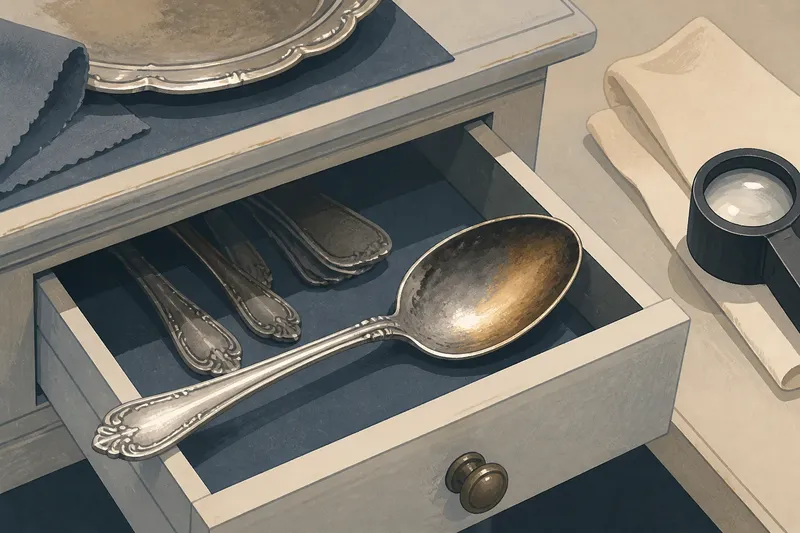
A silver spoon comes out of a drawer with a dusky stripe along its bowl. Silver tarnish can look like a record of neglect, but its color alone cannot tell you how well an object was made, how often it was used, or how carefully it was kept.
Think of darkening as a clue about the surface, not a verdict about the whole object. A few careful observations can help separate what you can see from what you are only guessing.
What Tarnish Shows
Tarnish is a change at the surface of silver. In ordinary indoor conditions, compounds in the surrounding air can react with silver and form a darker film. The change may appear as a faint haze, a golden cast, gray patches, or nearly black areas.
That film is not the same thing as dirt, though grime and tarnish can sit together. Dust, fingerprints, food residue, and polish left in recesses may collect on an object; tarnish is a chemical surface change. A soft cloth may lift loose surface soil without removing the darkened film beneath it.
Color varies with the conditions around the object and the way its surface is exposed. A hinge, a chased groove, or the underside of a handle may look darker than a broad, regularly handled area. Such contrasts are observations, not a care report.
Call it tarnish when you can see darkening; hold back from calling it neglect.
What Darkness Cannot Prove
Darkness by itself does not establish whether an object is solid silver, silver-plated, or made from another material with a silver-colored finish. It does not disclose the thickness of a plating layer or the quality of the workmanship. Those questions call for other evidence, such as marks, construction, and an informed examination.
Nor does a dark patch reliably reveal how long an object has been stored. Tarnish can develop under differing conditions, and its appearance is shaped by surface texture and exposure. A bright piece may have been polished recently; a dark one may have been left undisturbed in a way that allowed the surface to change.
Neglect is a broader judgment than color. It might involve damage, accumulated residue, or a missing part, but none of those should be inferred from a dark surface alone. Even a well-kept object can darken between occasions when it is handled.
Keep the observation narrow: “darkened surface” describes what is visible; “poor quality” and “careless owner” are conclusions that need separate support.
Patterns in the Surface
Where the darkening appears can help you describe the object more precisely, even if it cannot identify the cause with certainty. Recessed engraving, narrow seams, and the spaces around a handle often hold a darker appearance than exposed, smooth areas. These are difficult places to reach with a cloth, and their contours catch the light differently.
High points may look brighter because they are touched more often or because polishing reaches them first. A bright rim beside a darker engraved field can therefore reflect handling and surface shape, not a difference in the object’s design or history. Look from more than one angle before deciding that a mark is a separate stain or repair.
Say you inherit a small tray with a blackened pattern around its rim and a brighter center. You note the contrast, inspect for loose parts or obvious damage, and leave the pattern undisturbed until you know whether it is intentional detail or surface tarnish. The useful result is a clearer description and a lower chance of removing something significant in haste.
Describe location, color, and texture before reaching for a conclusion.
Questions About Tarnish?
Does tarnish mean silver is fake?
No. Tarnish is a surface change, not a dependable test of what lies beneath it. If identification matters, look for appropriate marks and consult a qualified appraiser or metals professional.
Does tarnish mean an object was neglected?
No. Tarnish can develop while an object is stored, displayed, or used, so it is not a reliable record of the owner’s habits. Consider the object’s overall condition rather than treating one surface change as a care history.
Why are some spots darker than others?
Surface contours, sheltered recesses, contact, and local exposure can make darkening appear uneven. The pattern may help you map where the surface has changed, but it does not by itself explain why each patch formed.
Should I polish every dark patch?
Not automatically. Polishing can alter a surface and may soften fine detail, especially if done repeatedly or with an unsuitable product. If the object is valuable, delicate, plated, or uncertain in identity, ask a qualified professional before treating it.
Care Without a Scrub
Start with the object’s purpose and condition, not a demand for uniform brightness. A working serving spoon and a finely detailed keepsake may call for different choices. If the surface is stable and the darkening does not interfere with use, leaving it alone is a reasonable option.
For routine dust or loose residue, use a clean, soft cloth and a light touch. Avoid abrasive pads, rough paper, and improvised cleaners that can scratch or react with the surface. Do not scrub into engraving just to make every recess match the polished high points.
If you decide that polishing is appropriate, choose a product intended for the object’s material and follow its label. Instructions from the maker, a conservator, or a qualified metals professional take precedence where they apply.
Pause if you see flaking, exposed base metal, a loose join, a thin-looking area, or a finish that may be lacquered. Those signs can make routine polishing a poor choice; professional advice is safer than escalating pressure or trying a stronger cleaner.
Never use tarnish as a reason to rub harder. A darker patch is not a stain that must be defeated, and aggressive cleaning can remove detail or finish along with the dark film.
Storage and Surroundings
Storage can influence how quickly silver’s appearance changes. Keep objects dry and away from materials or products that may release reactive compounds, such as some rubber, wool, felt, and household cleaners. A dedicated silver cloth or suitable storage pouch can reduce contact with air and surrounding materials.
Choose a place where pieces will not knock against one another. Separate wrapping can help prevent scratches, while a dry cabinet away from cooking fumes and damp areas may make storage more suitable. Avoid sealing an object away while it is wet or has food residue on it.
These choices are about managing conditions, not promising a permanently bright surface. Silver can darken again, and that change does not mean the storage choice failed or the object suddenly became inferior.
For a silver object you use, remove food residue after serving, dry it well, and return it to a clean, dry place. For a decorative piece, occasional visual checks can tell you whether its condition is changing without committing you to frequent polishing.
Read the Object Carefully
When darkening appears, record what you can actually observe: the location, the color, whether the surface feels smooth or rough, and whether there are signs of wear or damage nearby. A photograph in ordinary light can help you compare appearances later, but avoid treating a screen’s color as a reliable metal test.
Then decide whether the change needs action. If it is only a stable dark film, no immediate treatment may be needed. If the object’s identity, finish, or value affects the decision, an appraiser or conservator can assess details that color cannot settle.
Silver tarnish care begins with a useful distinction: darkening tells you that the appearance has changed, but not that the object is cheap, ruined, or unloved. For a silver object you use, simple habits matter: remove food residue after serving, dry it well, and return it to a clean, dry place.